When long Covid lingers for months, the hardest part is often not knowing what will actually help. People are told to rest, pace themselves and wait, yet many are still dealing with crushing fatigue, brain fog, poor sleep, aches, breathlessness and a nervous system that never seems to settle. That is why the search for the best therapies for long covid has become so urgent – not for a quick fix, but for realistic, structured support.
Long Covid is not one single pattern of symptoms. One person may struggle most with post-viral fatigue and heaviness in the body, while another is more affected by dizziness, chest tightness, headaches, digestive disturbance or flare-ups after even mild activity. Because the condition is so variable, the most effective approach is rarely one treatment in isolation. It is usually a tailored plan built around symptoms, tolerance and how the body responds over time.
What makes the best therapies for long covid different?
The best therapies for long Covid tend to have one thing in common: they support the body without overloading it. This matters because many people with Long Covid have reduced resilience. Treatments that feel too intense, too frequent or too general can leave someone worse rather than better.
A sensible therapeutic plan starts by looking at symptom patterns, energy crashes, inflammation, sleep quality, pain levels and nervous system strain. From there, treatment can be paced properly. For some, that means beginning with gentle manual work and nervous system support. For others, it may involve a more targeted plan for lymphatic congestion, muscular discomfort or chronic fatigue.
This is also where practitioner experience matters. Long Covid is not a routine wellness concern. It needs careful observation, an understanding of post-viral illness and a willingness to adjust treatment rather than push through symptoms.
The therapies that may offer the most useful support
The Perrin Technique for Long Covid
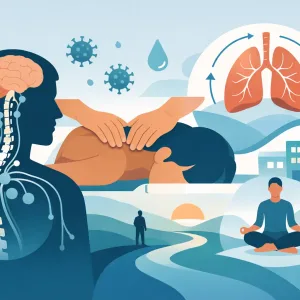
For people experiencing fatigue, cognitive fog, tender muscles, poor concentration and a sense of systemic overload, the Perrin Technique is one of the most specialist complementary approaches available. Originally developed in relation to ME and CFS, it is also used in Long Covid care where similar symptom patterns are present.
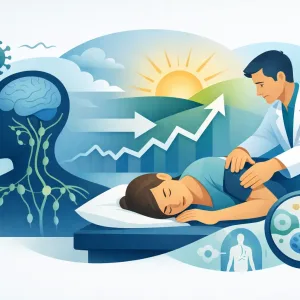
This hands-on therapy focuses on supporting lymphatic drainage and reducing congestion around the spine, chest and head. The thinking behind it is that impaired drainage may contribute to the build-up of inflammatory waste products, which in turn may affect fatigue and neurological symptoms. Whether that model fits every patient is still debated, but clinically, some people do report improvements in clarity, energy and overall functioning when treatment is delivered consistently and appropriately.
It is not a one-session solution. The Perrin Technique generally works best as a structured course, with progress reviewed over time. For patients whose Long Covid closely resembles post-viral fatigue syndromes, it can be one of the more relevant specialist options.
Lymphatic drainage massage
A heavy, sluggish, inflamed feeling is common in Long Covid. Some people describe waking up unrefreshed, carrying puffiness, muscular soreness or a sense that the body is simply not clearing well. In those cases, lymphatic drainage massage can be a useful supportive therapy.
This is a very gentle treatment, designed to encourage lymph flow rather than force change. That gentleness is part of its value. When the body is already struggling, strong massage can be too much. Lymphatic work is generally better tolerated and may help with fluid retention, tenderness and that overall sensation of stagnation.
It is worth being realistic, though. Lymphatic drainage is not a cure for Long Covid itself. It is better understood as a support for circulation, tissue comfort and recovery capacity, especially when used as part of a wider plan.
Acupuncture
Acupuncture is often considered when Long Covid symptoms are mixed and changeable. It may be used for fatigue, headaches, poor sleep, anxiety, body pain, digestive disturbance and breath regulation. One reason it can be helpful is that treatment can be adapted session by session according to what is most active.
For some patients, the goal is to calm an overactive stress response and improve sleep. For others, it is to reduce pain, ease tension in the chest and shoulders, or support energy more gently than conventional stimulation would allow. Many people with Long Covid feel as though their system is stuck in a loop of overdrive and depletion. Acupuncture may help settle that pattern.
As with any therapy, results vary. Some clients feel noticeably calmer and clearer quite quickly, while others need a gradual course before changes become consistent. The key is that treatment should be measured and responsive, not overly aggressive.
Reflexology and nervous system support
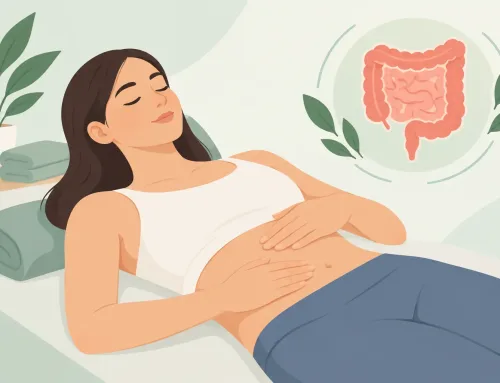
Long Covid is not only physical. It can leave people feeling wired, flat, anxious and deeply unsettled. When sleep is broken and the nervous system never properly switches off, recovery becomes harder. Reflexology can be a valuable part of care here, particularly for people who need something restorative and non-invasive.
The benefit is often less about one symptom disappearing overnight and more about helping the body shift into a quieter state. Better relaxation may support sleep, digestion and overall resilience. For someone who has spent months in a cycle of stress and symptom vigilance, that change can be significant.
Reflexology may be especially useful for those who are touch-sensitive, exhausted or not ready for more targeted bodywork. It can also sit well alongside acupuncture or specialist fatigue-focused treatment.
Gentle massage and bodywork for pain and restriction
Muscular pain, chest tightness, neck restriction and postural strain are common after prolonged illness. This can be partly due to inflammation, partly due to deconditioning, and partly due to the way people brace when they are unwell. Gentle massage and carefully selected bodywork may reduce discomfort and help people feel more at ease in their bodies again.
The important word here is gentle. Deep tissue work is not automatically better. In fact, it may provoke flare-ups in people with post-viral fatigue or heightened sensitivity. The most helpful treatment is often calm, skilled and moderate, with close attention to how the person feels in the following 24 to 48 hours.
Reiki and restorative therapies
Some people with Long Covid benefit from treatments that are explicitly restorative rather than corrective. Reiki can fall into that category. It may appeal to patients who feel depleted, emotionally drained or unable to tolerate much physical intervention.
From a clinical point of view, Reiki is best framed as a supportive therapy rather than a primary treatment for Long Covid symptoms. Its value is often in relaxation, emotional steadiness and the sense of being cared for during a difficult and uncertain recovery. For some clients, that is not a small thing. Feeling safer and calmer in the body can have knock-on effects on sleep, coping and symptom management.
When combining therapies works better than relying on one
Long Covid often responds best to a joined-up approach. A patient with marked fatigue and brain fog might do well with the Perrin Technique as the central therapy, with reflexology or acupuncture added to support sleep and regulation. Someone else may need lymphatic drainage for heaviness, alongside gentle acupuncture for headaches and breathlessness.
Combination treatment only works when it is properly paced. More therapy is not always better. If appointments are too close together, or if several treatments are introduced at once, it can be hard to tell what is helping and what is causing setbacks. The right plan should feel structured and calm, with room to assess response.
That is one reason many people seek practitioner-led clinics rather than booking treatments at random. At Willows Clinic, Long Covid support is approached in exactly this way – carefully, individually and with close attention to specialist symptom patterns.
What to look for when choosing long Covid treatment
If you are trying to decide between therapies, look first at the practitioner rather than the treatment name alone. Long Covid needs therapists who understand post-viral fatigue, symptom fluctuation and delayed crashes. A good practitioner will ask about energy levels, relapses, sleep, medication, diagnosis and what happens after exertion. They will not assume that a stronger treatment gives a better result.
It also helps to be clear about your priority. If your biggest issue is exhaustion and cognitive fog, specialist fatigue-focused work may be most relevant. If pain, poor sleep and stress are driving everything else, acupuncture, reflexology or gentle restorative bodywork may be a better starting point.
And if a therapy leaves you significantly worse each time, that matters. The best treatment is not the one that sounds most impressive. It is the one your body can tolerate and build on.
A more realistic way to think about recovery
People with Long Covid are often offered extremes: either complete passivity or promises that overstate what treatment can do. Neither is especially helpful. Recovery is usually steadier than that. It often involves reducing symptom load, improving resilience, making relapses less severe and helping the body function more normally again.
That may not be the dramatic answer people hope for when they first search for help, but it is often the honest one. Skilled complementary therapy can play a meaningful role in that process, especially when it is tailored, specialist-led and chosen with care. If you are living with Long Covid, the right support should leave you feeling understood, properly assessed and a little more hopeful about what comes next.