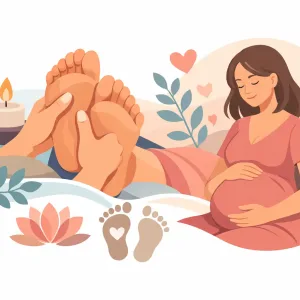
By the final weeks of pregnancy, it is understandable to look for gentle ways to feel more comfortable, settled and prepared. But does reflexology induce labour? The honest answer is that reflexology cannot be relied upon to start labour, and there is not strong enough evidence to promise that it will. When provided appropriately in late pregnancy, it may instead support relaxation, comfort and a sense of wellbeing while you wait for your body and baby to be ready.
For anyone considering reflexology near their due date, safety and realistic expectations come first. A skilled practitioner should work alongside – never in place of – the guidance of your midwife, obstetrician or maternity unit.
Does reflexology induce labour, or support the body?
Reflexology is a complementary therapy involving focused pressure and massage on specific areas of the feet, and sometimes the hands or ears. Reflexologists work on the principle that areas of the feet correspond with different parts and systems of the body. In pregnancy, treatment is generally adapted to suit the stage of pregnancy, your health history and how you are feeling on the day.
Some women report contractions beginning after a late-pregnancy reflexology appointment. Others feel deeply relaxed, sleep better or notice a reduction in tension without any change to the timing of labour. These experiences can be meaningful, but they do not prove that treatment caused labour to begin. Labour may have started naturally at that time regardless.
Research into reflexology for labour induction remains limited and mixed. Small studies have explored whether it affects pain, anxiety, labour length or the need for medical induction, but they do not provide a clear basis for saying reflexology starts labour. Pregnancy and birth are complex biological processes. The readiness of the cervix, hormonal changes, your baby’s position and your individual medical circumstances all have a far greater influence than pressure applied to the feet.
A more helpful way to view reflexology is as supportive care. If stress, poor sleep, swollen feet or physical tension are making the final weeks harder, a calm, tailored session may help you feel better supported. That is different from making a clinical promise to bring on labour.
Why relaxation may still be valuable before birth
The final weeks can bring a particular kind of pressure: anticipation, interrupted sleep, aches, appointments and questions about whether your baby will arrive on time. When the nervous system is constantly on alert, it can be difficult to properly rest.
Gentle touch therapies may encourage a calmer state by giving you dedicated time to slow down and release tension. Some clients find that this helps them feel more connected to their changing body and more able to cope with the uncertainty of waiting. A reflexology appointment can also offer practical comfort for tired feet and lower-leg heaviness, provided it is suitable for you.
This does not mean relaxation is a substitute for maternity care, nor that being stressed prevents labour. It simply recognises that emotional and physical comfort matter. Supportive treatment can have a place in a well-managed pregnancy when it is delivered within appropriate boundaries.
A treatment should never be presented as a guaranteed induction
Be cautious of any practitioner who says they can trigger labour at a particular point on the foot, guarantee a delivery date or advise you to avoid medical advice. There is no evidence-based reflex point that can reliably override the natural timing of labour.
Similarly, a session should not be used to delay assessment when you have a concern. If your maternity team recommends induction because of your health or your baby’s wellbeing, discuss any complementary therapy with them first. Reflexology may be an addition to your comfort plan, but it must not interfere with a recommended medical plan.
When might pregnancy reflexology be appropriate?
For an uncomplicated pregnancy, some people choose reflexology during the later stages to support general wellbeing, relaxation and physical comfort. The right timing varies. Many practitioners reserve labour-preparation focused treatment for term pregnancy and will ask you to confirm that your midwife or consultant has no concerns.
Before booking, a thorough consultation should cover your due date, previous pregnancies, current symptoms, medications, scans or monitoring, and any advice from your maternity team. The therapist should explain what the session can reasonably offer, obtain your consent and adjust positioning so that you remain comfortable.
At Willows Clinic, a pregnancy-focused appointment should be tailored rather than treated as a standard foot massage. Your treatment plan needs to reflect both your goals and the clinical context of your pregnancy.
Situations that need maternity-team approval first
Do not book reflexology with the aim of inducing labour without first speaking to your midwife or obstetrician if you have been advised that your pregnancy needs closer monitoring. This includes, but is not limited to, high blood pressure or pre-eclampsia concerns, gestational diabetes requiring specialist management, placenta previa, bleeding, reduced fetal movements, a history of preterm birth, multiple pregnancy, suspected growth concerns or a planned caesarean birth for medical reasons.
You should also seek medical advice before any treatment if you have new or severe swelling, a painful or hot calf, severe headache, visual disturbance, chest pain, shortness of breath, persistent abdominal pain, fever or feel generally unwell. These symptoms need assessment rather than complementary treatment.
What happens during a late-pregnancy reflexology session?
A professional appointment begins with questions, not treatment. Your practitioner should check how many weeks pregnant you are, whether you have any symptoms that need referral, and what outcome you are hoping for. If your primary aim is to make labour start, they should explain clearly that this cannot be guaranteed.
You will usually be positioned comfortably, often semi-reclined or supported on your side where needed. The therapist uses controlled pressure across the feet and may adapt the pressure if you are sensitive, tired or experiencing fluid retention. The appointment should feel calm and comfortable, never intense or painful.
Afterwards, you may feel relaxed, sleepy or more aware of sensations in your body. Drink normally, rest if you can and pay attention to how you feel. If you develop regular contractions, waters breaking, bleeding or reduced movements, contact your maternity unit for advice rather than assuming this is simply a response to treatment.
Reflexology versus medical induction
Medical induction is a clinical process used when the benefits of birth outweigh the benefits of continuing the pregnancy. Depending on your circumstances, it may involve medicines to soften the cervix, a balloon catheter, breaking the waters or an oxytocin drip. Your maternity team will explain why induction is being offered, the alternatives, potential risks and what to expect.
Reflexology does not perform the same function and should not be compared as an alternative method of induction. It does not assess cervical readiness, monitor your baby or manage pregnancy complications. Its role, where appropriate, is complementary: it may help you feel calmer or more comfortable before, during or after discussions about your care.
If you are approaching or past your due date, ask your midwife the questions that will help you make informed decisions. These might include how your baby is being monitored, what your options are, how long it is safe to wait, and whether reflexology is suitable as part of your personal wellbeing plan.
Choosing a safe reflexologist in pregnancy
Look for a practitioner with recognised reflexology training and specific experience of pregnancy care. They should take a full case history, understand when not to treat, welcome communication with your maternity team and avoid exaggerated claims.
A good practitioner will also be comfortable saying no. If you have symptoms that require medical assessment, or if the timing is not appropriate, the safest response is to refer you back to your midwife or doctor. This is a sign of sound clinical judgement, not a lack of care.
A gentle option, not a deadline for birth
The days around a due date can feel long, particularly when friends and family are asking for updates. Reflexology may offer a quiet, supportive space to rest and feel cared for, but it cannot set your baby’s birthday. Choose treatment for comfort and wellbeing, keep your maternity team informed, and let any decision about induction be guided by your individual clinical care.