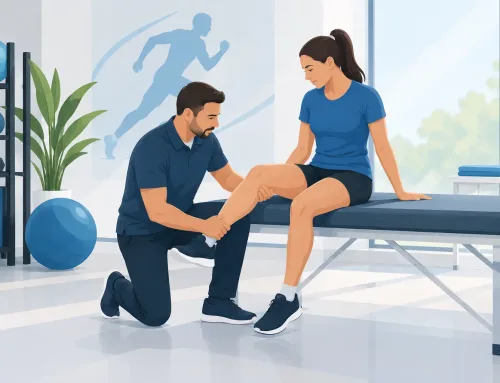
A shoulder that catches when you reach overhead, a calf that still feels guarded after a strain, or a knee that loses confidence on the stairs can make the return to normal activity feel frustratingly slow. Kinetic taping recovery is often used at this stage to provide gentle support and sensory feedback while the body regains comfortable movement. It is not a replacement for diagnosis, rehabilitation or rest where needed, but it can be a useful part of a carefully planned recovery programme.
The coloured elastic tape frequently seen on athletes and active people is more commonly called kinesiology tape. Some people use the term kinetic taping to describe the same approach. Unlike rigid sports tape, which is designed to restrict a joint for a short period, elastic tape is intended to move with the skin and muscles. When applied appropriately, it may help you feel more supported without making everyday movement feel overly constrained.
What kinetic taping recovery is designed to do
Kinetic tape is applied to clean, dry skin in a specific direction and with a chosen level of stretch. The placement is not simply cosmetic. A trained practitioner considers the area involved, your symptoms, your movement pattern and the stage of healing before deciding whether taping is suitable.
The tape lightly lifts and stimulates the skin as you move. This can alter the sensory information travelling from the taped area to the brain, which may improve awareness of position and movement. For some people, that added feedback makes an uncomfortable movement feel more manageable. It may also offer a sense of reassurance as they return to walking, exercise, work tasks or sport.
The benefit is rarely about the tape alone. Recovery after an injury depends on the nature and severity of the problem, tissue healing, sleep, training load, strength, mobility and how consistently rehabilitation is followed. Taping is most valuable when it supports these foundations rather than becoming something you feel unable to move without.
When kinetic taping may be useful in recovery
Kinetic taping can be considered for a range of soft-tissue and movement-related concerns. It is commonly used following mild muscle strains or sprains, during recovery from overuse discomfort, and where a joint or muscle feels hesitant during return to activity. Areas that may respond well include the shoulder, knee, ankle, lower back, calf, wrist and elbow.
For example, a runner returning after calf tightness may use tape alongside gradual loading, mobility work and attention to footwear and training volume. Someone with shoulder discomfort may benefit from taping that encourages better awareness of shoulder position while they carry out prescribed strengthening exercises. In each case, the objective is practical: to help the person move with greater comfort and confidence while addressing the factors that contributed to the issue.
It can also be useful where mild swelling remains after an injury, particularly when combined with appropriate manual therapy, movement and clinical advice. However, unexplained or sudden swelling needs proper assessment first. Tape should never be used to mask a problem that requires medical investigation.
Support without immobilising the area
A key advantage of elastic taping is that it allows movement. This matters because complete immobilisation is not always the right answer once the acute phase of an injury has passed. Gradual, well-managed movement helps many people restore strength, coordination and tolerance for daily activity.
That said, more support is not automatically better. A freshly injured ligament, suspected fracture, significant tear or unstable joint may require a different approach, such as medical assessment, bracing, imaging or a period of protection. The right level of support depends on what has happened and how your body is responding.
A helpful option for active adults
For active adults, the difficult point in recovery is often not the original injury but the transition back to normal training. Pain may have settled, yet a certain movement still feels unreliable. Tape can offer a temporary physical reminder not to overreach, twist suddenly or add too much load too quickly.
It should not be treated as permission to train through sharp pain, swelling, weakness or altered movement. If taping makes activity feel possible but symptoms worsen later that day or the following morning, the workload may still be too high.
What a practitioner considers before applying tape
Effective taping begins with assessment. A practitioner should ask how the injury happened, when symptoms started, what movements aggravate them, whether there is swelling or numbness, and how the problem is affecting work, sleep and activity. They should also observe posture, range of movement and the way the relevant area responds to gentle testing.
From there, the tape application may be combined with hands-on treatment, soft-tissue work, mobility guidance or a progressive exercise plan. At Willows Clinic, physical recovery support is approached as a tailored process rather than a one-size-fits-all treatment. The aim is to understand why an area is overloaded or restricted, then select therapies that support meaningful improvement.
A good plan also includes clear expectations. Some people notice immediate comfort or improved confidence with movement. Others feel very little change, or find that another form of treatment is more appropriate. A responsible practitioner will review the response rather than repeatedly reapplying tape without a clear benefit.
How long tape is usually worn
Depending on the application, skin sensitivity and activity level, kinetic tape is often worn for several days. It is designed to tolerate normal movement and light showering, although it should be patted dry rather than rubbed vigorously with a towel.
The corners can be trimmed if they begin to lift, but the tape should be removed if it causes itching, burning, a rash, increased pain or any skin irritation. Removing it slowly, preferably after a shower or with a little oil around the edges, is kinder to the skin than pulling it off quickly.
Repeated taping without breaks may irritate the skin, especially in people with eczema, fragile skin or known adhesive sensitivity. The skin needs checking each time, and tape should not be placed over open wounds, broken skin, active infection or an unexplained rash.
When taping is not the right next step
There are times when assessment matters more than support. Seek prompt medical advice for severe pain after trauma, inability to bear weight, obvious deformity, sudden major swelling, loss of sensation, unusual weakness, a hot or red swollen calf, chest pain, breathlessness, or symptoms that are worsening rather than settling.
People with circulation concerns, diabetes-related skin or nerve changes, a history of blood clots, active cancer treatment, known adhesive allergy or significant skin conditions should discuss taping with a suitably qualified healthcare professional before use. Pregnancy, recent surgery and persistent unexplained pain also call for an individual assessment.
Taping is not intended to diagnose an injury. Nor can it repair a torn tendon, stabilise a fracture or resolve the underlying cause of recurrent pain by itself. If the same problem keeps returning, the more useful question is usually why the area is repeatedly being overloaded.
Getting better results from kinetic taping recovery
The most successful use of tape is purposeful and time-limited. It may be used for a specific workday, a gradual return to walking, or the early stages of resuming exercise while strength and control are being rebuilt. As recovery progresses, the goal is usually to rely less on external support and more on your own capacity.
Pay attention to what changes while the tape is on. Can you move more freely? Is your gait more natural? Does discomfort settle, remain unchanged or increase after activity? These details help guide the next stage of treatment far more effectively than simply deciding whether the tape looks as though it is still in place.
If an injury is holding you back, the right support should make daily life and movement feel more achievable, not leave you dependent on a strip of tape. A personalised assessment can establish whether kinetic taping has a useful role in your recovery and, more importantly, what will help you return to activity with lasting confidence.